




























Goods and Services Tax (GST) has been touted as one of the most transformative tax reforms in India. Launched in July 2017, the GST system unified indirect taxation across the nation, replacing a plethora of taxes like VAT, Service Tax, Excise Duty, and Central Sales Tax. It is essential to understand the structure and types of GST before delving into the process of GST certificate download.
This article aims to provide detailed insights into the types of GST, their significance, and their application in the Indian taxation framework. In addition, it touches upon the concept of GST registration and how you can download your GST certificate after completing the necessary formalities.
What Is GST?
GST is a destination-based taxation system imposed on the supply of goods and services. It integrates various central and state taxes under one umbrella, thus simplifying India’s tax ecosystem. Businesses and consumers benefit from a single tax structure, which promotes transparency and reduces cascading taxation (tax on tax).
Under the GST regime, every business with a turnover exceeding the prescribed limit must undergo GST registration. Upon registration, businesses receive a GST certificate, which acts as proof of their compliance with the tax system.
Types of GST: A Detailed Explanation
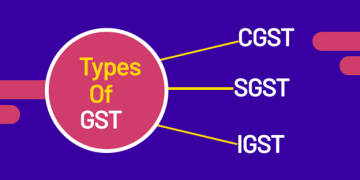
The GST system in India is classified into four major types. Each type of GST addresses taxation across specific layers of authority—Central Government, State Governments, and Union Territories. Let’s explore the types of GST and how they impact taxpayers:
CGST – Central Goods and Services Tax
CGST is levied by the Central Government on intra-state transactions. When goods or services are supplied within the same state, CGST is charged alongside SGST (State Goods and Services Tax). The revenue earned through CGST goes directly to the central government’s coffers.
Key Features of CGST:
- Applicable for intra-state supply of goods and services.
- Administered under the CGST Act.
- Ensures uniformity in tax rates across states.
- Rates are decided based on product categories such as luxury goods and essential commodities.
For example, if a business sells goods worth ₹10,000 within Karnataka, the GST applicable would be split between CGST and SGST (e.g., 9% CGST and 9% SGST).
SGST – State Goods and Services Tax
SGST is levied by the state governments on intra-state transactions. For every intra-state transaction, SGST is charged along with CGST in equal proportions, and the revenue collected under SGST goes to the respective state government.
Key Features of SGST:
- Applicable on transactions occurring within one state.
- Administered by the state government under the SGST Act.
- Helps mitigate double taxation issues that existed under the earlier indirect tax regime.
For example, in the case of intra-state sales in Maharashtra, SGST at an applicable rate (say, 9%) will go to the state government of Maharashtra.
IGST – Integrated Goods and Services Tax
Unlike CGST and SGST, which are applicable to intra-state transactions, the Integrated Goods and Services Tax (IGST) is imposed on inter-state transactions. It is also levied on imports and exports, making it a crucial tax for international trade.
The IGST collected is shared between the central and state governments based on predefined formulas. Essentially, IGST ensures a seamless flow of tax revenue between states and the center.
Key Features of IGST:
- Covers inter-state and international transactions.
- Administered under the IGST Act.
- Promotes ease of trade between states.
- The revenue is apportioned between the central and destination state governments.
For example, when a company in Tamil Nadu sells goods to a company in Gujarat, IGST is charged on the transaction and allocated accordingly.
UTGST – Union Territory Goods and Services Tax
Union Territory Goods and Services Tax (UTGST) is applicable to transactions occurring within Union Territories (UTs) of India. It operates similarly to SGST but is specific to Union Territories such as Delhi, Chandigarh, Andaman and Nicobar Islands, Daman and Diu, and Lakshadweep.
Like SGST, UTGST works alongside CGST for intra-UT supplies. However, for transactions occurring in non-UT regions, UTGST is not applicable.
Key Features of UTGST:
- Exclusive to Union Territories.
- Administered under the UTGST Act.
- Helps streamline taxation in UTs where there are no distinct state governments.
An example would be the sale or supply of goods within Delhi, where UTGST is charged alongside CGST.
Why Should You Understand Types of GST?
When preparing to register for GST or GST certificate download, understanding the various types of GST helps in:
- Familiarizing yourself with tax applications.
- Ensuring compliance with the right GST category (CGST, SGST, IGST, or UTGST).
- Helping businesses calculate taxes accurately and avoid penalties.
- Reducing confusion regarding taxation on intra-state versus inter-state transactions.
GST and GST Certificate Download: A Step-by-Step Guide
Once you understand the types of GST, the next step is acquiring a GST certificate for your business. The GST certificate acts as evidence of your GST registration and compliance. It is a crucial document that validates a taxpayer’s incorporation into India’s GST system.
Step 1: Register for GST
Every individual or business with annual turnover crossing the threshold limit (Rs. 20 lakhs for services and Rs. 40 lakhs for goods) must register for GST. GST registration can be completed on the GST portal.
Documents Required for GST Registration:
- PAN card of the business owner.
- Aadhaar card for identity verification.
- Business address proof (rental agreement, electricity bill, etc.).
- Bank details, including a canceled cheque.
- Business constitution documents, such as Partnership Deed or Certificate of Incorporation.
- Digital signature for authentication.
Step 2: Obtain Your GST Identification Number (GSTIN)
After successfully completing the registration process, the GST portal generates a unique 15-digit GST Identification Number (GSTIN). This number is used for all GST-related activities, filing tax returns, and claiming input tax credits.
Step 3: GST Certificate Download
Once GST registration is approved, taxpayers can download their GST certificate from the GST portal.
Steps to Download GST Certificate:
- Visit the official GST portal.
- Log in to your account using your credentials, including GSTIN and password.
- Navigate to the “Services” option in the navigation menu.
- Select “User Services,” followed by “View/Download Certificate.”
- A PDF copy of your GST certificate will be available for download.
Keep this GST certificate safe, as it is often needed during audits, tax filings, and various business transactions.
Components of GST Certificate
Your GST certificate contains the following details:
- GSTIN (Goods and Services Tax Identification Number).
- Company or individual name.
- Address of the business.
- Date of registration.
- Type of GST registration (regular, composite).
- Business structure details (proprietorship, partnership, etc.).
Importance of GST Certificate
The GST certificate is more than just an identity document for taxpayers—it is legally binding proof of your compliance with India’s taxation laws.
- Legal Compliance: Mandatory for businesses exceeding turnover thresholds.
- Ease of Transactions: Many suppliers and distributors insist on GST registration for smooth trade.
- Tax Filing: Essential for filing monthly, quarterly, or annual GST returns.
- Claiming ITC: Businesses can claim Input Tax Credit (ITC) efficiently.
- Avoiding Penalties: Helps prevent legal and financial penalties for non-compliance.
The Interconnection Between Types of GST and GST Certificate Download
Once registered under the GST system, you pay taxes based on transactions covered under CGST, SGST, IGST, or UTGST. Your GST certificate will also include details specific to your place of business.
- Intra-State Transaction: CGST and SGST apply.
- Inter-State Transactions: IGST applies.
- Union Territory Transactions: UTGST applies alongside CGST.
Understanding these nuances simplifies tax compliance, assists in bill generation and breakdown, and minimizes errors during GST return filing.
Conclusion
GST has redefined the landscape of taxation in India by combining various taxes under one umbrella. The four types of GST—CGST, SGST, IGST, and UTGST—create a structured and transparent tax regime, making it essential for business owners to comprehend the system before registering or proceeding with a GST certificate download.
Whether you’re a small business owner, a trader involved in inter-state commerce, or a professional selling services, understanding the types of GST is critical to meet compliance standards and avoid penalties. Once you’re ready, the process of GST registration and GST certificate download is straightforward on the GST portal.