






























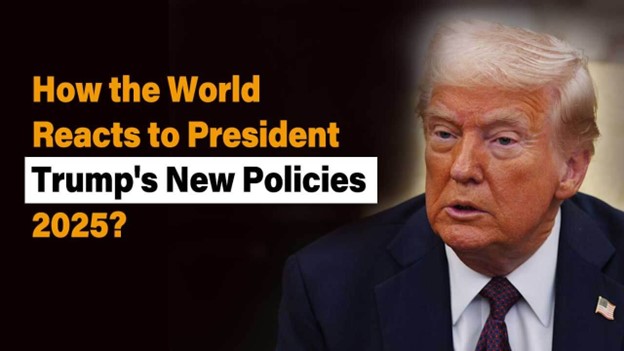
President Donald Trump has outlined a list of policy priorities in his 2025 agenda that may have various implications for the United States across multiple sectors. These policies aim at economic growth, national security, reforming immigration, energy independence, and reforming the healthcare system. It is essential that voters, businesses, and international partners are aware of the implications of these policies and their potential impact on ordinary Americans.
Economic Development and Creation of Employment
The economic expansion is one of the staple objectives of the 2025 agenda by Trump. The administration has come up with strategies to help increase the gross domestic product (GDP) and lower the level of unemployment.
Tax reform is one of the pillars of economic policy. The plan focuses on reducing the business taxes in order to stimulate investment and to retain the corporations in the United States as opposed to relocating them to other countries. This strategy is based on the previous tax cuts, and the premise is that a competitive tax environment will create more employment and raise wages.
The other element is deregulation. The Trump’s New Policies 2025 agenda involves the repeal of the policies that are regarded as cumbersome to small businesses and other sectors, like manufacturing and technology. The administration believes that its trick of lowering regulatory hurdles will lead to increased productivity and lower consumer/business costs.
Trade agreements are also important in the economic policies of Trump. The proposed strategy will be more inclined to renegotiate or modify trade agreements in order to get what the administration has labeled as more favorable conditions to American workers. This also entails encouragement of exports and shielding some of the domestic industries against what is perceived to be unfair foreign trade practices.
Immigration Reform and Border Security
The Trump 2025 policy agenda is focused on immigration and border security. The administration suggests more funding to border control, both in technology and manpower at the ports of entry and the southern border.
The policy focuses on the implementation of the current laws on immigration in a stricter way and the reconsideration of the asylum processes. The plan includes a concentration on merit-based immigration, which will bring skilled workers who can contribute to the economy and minimize the pressures on public services.
One of the key features of the immigration plans is the address to the issue of undocumented migration through increasing physical and technical barriers to the major border points and quickening the adjudication process. As the administration claims, the aim is to minimize the number of illegal crossings and simplify the legal migration routes of migrants.
Opponents are concerned about the humanitarian consequences and protection of the legal process, whereas the proponents believe that the enhancement of enforcement enhances national security and the stability of the labor market.
Adjustments in a Healthcare System
The issue of healthcare in the United States is a complicated and expensive one. The 2025 policies proposed by Trump will seek to reform the system, but not entirely undo the existing reforms.
Promotion of competition between insurers is one of them. The administration aims to increase access to the plans that cross state borders and promote more personal ones with different rates of coverage and costs.
Furthermore, the focus on reducing the cost of prescription drugs is also given. The suggestions involve the act of negotiating the prices of drugs with drug manufacturers and attaching the Medicare prescription drug payments to international pricing standards. Others who support this view believe it will cut out-of-pocket expenses among seniors and other patients.
There is also the healthcare policy aspect that deals with telemedicine expansions and incentives that can be given to healthcare providers to use digital technologies that can enhance care delivery and minimize administrative costs.
Energy Independence and Environmental Policy
In his 2025 policy agendas, Trump has paid a lot of attention to energy production. The administration has been favoring the expansion of oil, natural gas, and coal exploration, and the mentioned objective of energy independence.
Part of this strategy involves lifting regulatory barriers on drilling and mining and encouraging US energy exports. The officials claim more production enhances national security and stabilizes the world energy markets.
Meanwhile, the strategy involves investment in the next-generation energy technologies, such as carbon capture and some renewable technologies, where the focus is made on the leadership of the privative sector instead of federal regulations.
Environmental organizations have denounced this plan because it did not give much emphasis to climate change mitigation. The proponents respond that economical development and technological advancement can go hand in hand with environmental enhancement.
Foreign Policy and National Security
Trump 2025 policies focus on strengthening U.S. military power and perfecting alliances on the foreign policy and national defense. To help the defense, modernization and service member support, increased defense spending is offered.
One of the most significant themes is the need to put the strategic interests of America first in foreign countries. This embraces more transactional nature of alliances such as NATO whereby burden-sharing and mutual benefits are in focus.The management also provides a hard approach to the competitors like China, which is concerned with trade, technology and military placement. Some of the policies entail the reinforcement of cyber defenses and ensuring the security of critical materials supply chains.
The plan also focuses on long-term interactions with partners and combines diplomatic and economic pressure on the hostile states in the Middle East and other regions.
Agriculture and Rural Development
The 2025 agenda focuses on rural population and agricultural sector. The policies are used to assist farmers by creating markets that export goods and stabilizing the prices of crops.
The rural broadband expansion is intended to support education and business through infrastructure investment to better connectivity. The broader economic strategy includes support of local manufacturing and renewable energy project in the rural areas.
Homeland Security and Law Enforcement.
The 2025 policy proposals of Trump are more focused on law and order, and there will be more support both to law enforcement organizations of the federal and state level. The funding areas are training, technology upgrade, and community policing.
The administration claims that the increased crime-fighting presence and resources will lower crime and enhance the safety outcomes in the community. Meanwhile, some practices are discussed to be reformed in order to make them accountable and trusted by the community.
Conclusion
The 2025 policy blueprint of president Trump is very broad and covers various areas, which directly affect the American society. These policies show a common thread either oriented towards economic development, immigration control, healthcare reform, energy production or national security; all these are aimed at American interests and competitive stance in the international arena.
As these proposals undergo legislative and administrative reviews, their practical implications will be more apparent. The policy orientations presented here give a pathway on how the United States can go about the major challenges in the next few years and how the citizens, businesses, and policymakers can react to them.