
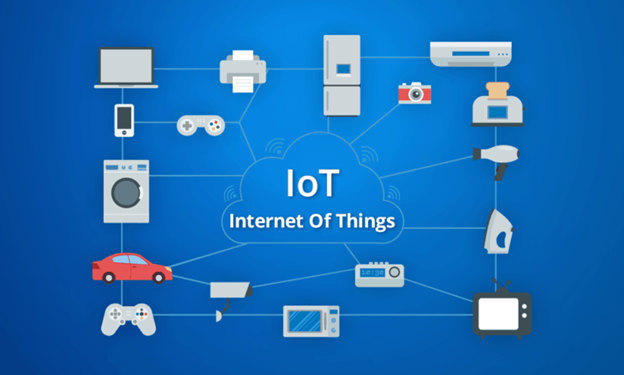
In today’s hyper-competitive manufacturing landscape, downtime is the enemy. Every second of unplanned machine failure results in lost output, reduced profit margins, and delayed market deliveries. According to Deloitte, industrial downtime costs manufacturers an estimated $50 billion annually. This is where the Internet of Things (IoT) becomes a game-changer, unlocking the full potential of predictive maintenance.
As manufacturing enterprises modernize their infrastructure, IoT-powered predictive maintenance is becoming one of the most strategic investments. It enables organizations to monitor asset health in real-time, predict equipment failure, and automate maintenance schedules before problems escalate.
What Is IoT-Driven Predictive Maintenance?
Predictive maintenance leverages smart IoT sensors, connected devices, and AI algorithms to collect machine data such as
- Temperature
- Pressure
- Vibration
- Acoustic patterns
- Energy consumption
- Humidity
- Load and torque
This real-time data is analyzed to detect abnormalities, identify wear patterns, and forecast possible malfunctions.
Instead of performing maintenance at fixed intervals, enterprises maintain equipment only when required, based on actual asset condition.
Why Manufacturers Are Adopting IoT for Predictive Maintenance
Adopting IoT solutions helps businesses:
✅ Reduce downtime by 30–50%
✅ Cut maintenance costs by up to 25%
✅ Increase asset lifespan
✅ Ensure worker safety
✅ Improve production efficiency
For industries with heavy machinery—like automotive, aerospace, mining, and chemical engineering—the impact is massive.
How IoT Predictive Maintenance Works: Step-by-Step
1. Data Collection via Smart Sensors
Sensors capture vibration, sound patterns, and temperature variations from machines.
2. Data Transmission
Data is transmitted to a cloud platform through protocols like MQTT, CoAP, or 5G.
3. AI-Driven Analysis
Machine learning models identify trends and detect anomalies.
4. Failure Prediction
The system predicts when components might fail—far in advance.
5. Automated Alerts
Technicians receive instant notifications on mobile dashboards.
6. Maintenance Scheduling
Service engineers can plan repairs during non-productive hours.
This eliminates guesswork and manual inspection cycles.
Key Technologies Powering Predictive Maintenance
To implement successful predictive maintenance, IoT integrates:
Edge computing for faster decision-making
Digital twins for real-time simulation
AI/ML algorithms for anomaly detection
Cloud analytics platforms (AWS IoT, Azure IoT, Google IoT Core)
Wireless communication like NB-IoT, LoRaWAN, 5G
Together, they enable powerful industrial automation.
Real-World Use Cases
1. Smart Factory Equipment Monitoring
Production machines are monitored 24/7 for:
- Bearing failures
- Motor overheating
- Shaft misalignment
- Lubrication issues
2. Predictive Maintenance in Mining
Heavy vehicles instrumented with IoT sensors predict engine wear and brake failures.
3. Oil & Gas Pipeline Monitoring
Sensors detect corrosion, leakage, and pressure fluctuations.
4. Energy Plant Turbine Monitoring
Vibration analytics prevent catastrophic turbine breakdown.
Advantages of IoT Predictive Maintenance
Reduced Repair Costs
Fixing small issues before failure avoids expensive replacement.
Improved Worker Safety
Machine failure hazards are minimized.
Longer Machine Lifespan
Optimal maintenance increases operational longevity.
Better Inventory Planning
Replacement parts are stocked based on prediction—not panic.
Higher Productivity
Less downtime means more output and revenue.
IoT vs. Traditional Maintenance Approaches
| Approach | Strategy | Drawback |
| Reactive | Fix after failure | Costly, dangerous |
| Preventive | Fixed schedule | Unnecessary repairs |
| Predictive (IoT) | Actual asset condition | Most efficient |
Predictive maintenance wins in performance, cost savings, and safety.
Industries Benefiting the Most
- Automotive manufacturing
- Power generation
- Pharma machinery
- Food & beverage factories
- Aviation & aerospace
- Chemical processing
Any industry with high-value assets can benefit.
Business Impact: ROI and KPIs
Enterprises measure value through:
Reduction in unscheduled downtime
Lower maintenance labor hours
Decreased spare part inventory cost
Increased Overall Equipment Effectiveness (OEE)
Better compliance and quality control
Most organizations witness ROI within 6–12 months.
Challenges and How IoT Solves Them
| Traditional Challenge | IoT Solution |
| Manual inspection errors | Sensor-based automated analysis |
| Unexpected failures | Real-time prediction |
| Costly downtime | Condition-based scheduling |
| Limited visibility | Cloud dashboards & alerts |
How an IoT Development Company Helps
A professional IoT development company provides:
IoT consulting & strategy
Sensor integration and hardware engineering
Predictive analytics using ML models
Custom mobile/web dashboards
Cloud enablement
Security implementation
Device lifecycle management
They ensure deployment scalability at industrial levels.
Security Considerations
IoT security is crucial. Companies implement:
- Encrypted data transfer
- Secure boot for devices
- Identity access management
- Firmware OTA updates
- Threat intrusion detection
Security ensures data integrity and equipment safety.
Future Trends Driving Adoption
AI-Optimized maintenance automation
Digital twins for simulation
Zero-touch device provisioning
5G-enabled ultra-low latency monitoring
Autonomous maintenance bots
Predictive maintenance is evolving toward full autonomy.
Conclusion
IoT-powered predictive maintenance is no longer optional—it’s a strategic necessity. Manufacturers who invest in connected asset monitoring gain:
- Reduced downtime
- Higher output quality
- Longer machine life
- Stronger safety metrics
- Better ROI
As competition intensifies, IoT adoption will differentiate industry leaders from laggards. Partnering with the right IoT development company ensures successful transformation, seamless deployment, and expert support throughout the asset lifecycle. With the future leaning toward autonomous smart factories, IoT predictive maintenance will remain central to Industry 4.0 success.