
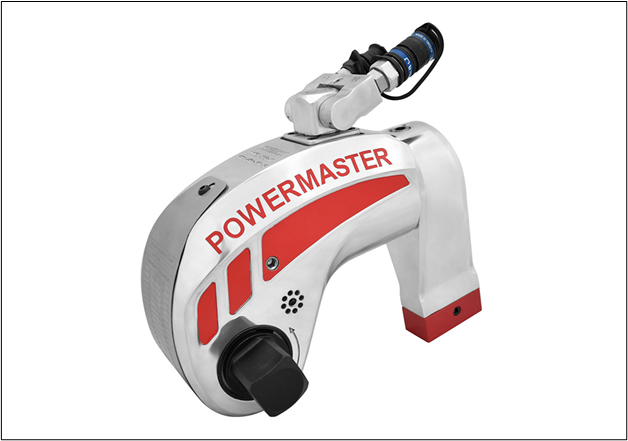
Heavy equipment is operated under one of the most severe mechanical load where even a slight irregularity in the fastening of the joints can cause severe performance problems. In this context, a hydraulic torque wrench is not a convenience, but a necessity for controlled and repeatable tightening of critical assemblies. Accurate torque regulation means that fasteners can be ensured to have optimal clamping force, preventing them from wearing out and loosening too early due to vibration.
Unlike light-duty assemblies, joints in heavy equipment are scheduled to distribute extremely high loads evenly. The distribution of the torque application is disturbed by any variation in the torque application, resulting in stress concentration at certain points. Over periods of time, these imbalances can lead to things like bolt failure, flange distortion, or a misalignment of the components, all of which will affect operational safety.
The Engineering Significance of Torque Precision
Joint integrity in heavy machinery is directly related to accuracy in torque. Proper torque gets bolts stretched out in their elastic range, that ensure they hold the required tension without permanent deformation.
As a result of inconsistent application of the torque, fasteners can loosen in the event of vibration, or they may fail because of over-tightening. Precision torque control eliminates these risks by making sure that torque is applied per engineering calculations so that the equipment’s behavior under load can be predicted.
Torque Control as a Safety Requirement
Poor bolting is a factor that causes industrial accidents. Fasteners that are under-torqued may loosen, and over-torqued bolts are quite likely to break. Precision torque control is used as a safety measure to prevent either extreme. Controlled tightening is essential in the case of heavy equipment settings in works of the same nature as the design of the structure.
Factors Contributing to Torque Reliability
More than just the wrench determines the torque accuracy.
Calibration and System Uniformity
Regular calibration ensures that torque output is accurate. Hydraulic systems apply force smoothly and consistently on fasteners, which reduces the torque variation. Consistency is critical in repetitive bolting applications, especially in this case.
Tool and Fastener Interface
The point of connection is critical. Properly fitted power sockets carry out efficient torque transfer with no slipping or rounding out. Poor Socket Fit leads to increased energy loss and measurement error, which decreases accuracy.
Surface and Environmental Conditions
Torque performance is influenced by lubrication, surface finish and temperature. Precision tightening procedures take these variables into account to ensure that the amount of applied torque produces the desired amount of clamping force.
Operational and Maintenance Benefits
Accurate torque control minimizes rework, inspection failures and unplanned downtime. Correct tightening enhances long-term reliability and easy maintenance planning. Equipment assembled with controlled torque to keep the equipment in alignment for longer periods of time and to have fewer joint-related failures.
Conclusion
Precision torque control is one of the safe and reliable heavy equipment operations. Controlled tightening ensures the structural integrity and greatly reduces operational risk.
Organizations like POWERMASTER India work within this specialized technical sphere and serve bolt torque-controlled applications in heavy industrial applications across a range of industries like infrastructure, power generation and large-scale mechanical applications.