
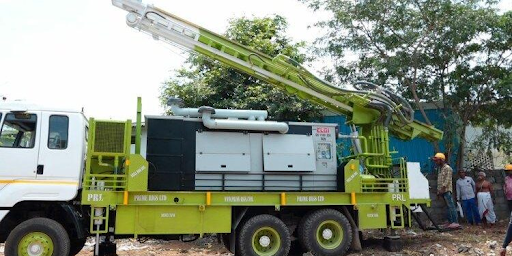
A borehole project in soft agricultural soil can require a very different approach from drilling through solid rock for an industrial water supply. The ground beneath the surface determines how drilling progresses, which tools are needed, and how efficiently a project can be completed. Understanding the types of borehole drilling machine available helps contractors match equipment to geological conditions, site restrictions, and the intended purpose of the borehole.
Rotary Drilling For Versatile Applications
Rotary drilling uses a rotating drill bit to cut or break the formation. Depending on the equipment and tooling, this method can be used in different soil types and geological conditions.
It is commonly considered for water wells, site investigations, and other borehole projects. The choice of bit, rotation speed, and drilling fluid depends on the ground conditions and borehole design. Contractors should confirm that the selected system can handle the expected depth and formation.
Down-The-Hole Hammer For Hard Rock
Hard rock can slow conventional drilling methods and increase wear on equipment. Down-the-hole hammer drilling addresses this challenge by using a pneumatic hammer near the drill bit to break rock through repeated impacts. Selecting the right drilling rig machine is essential for handling these demanding ground conditions.
This method can be suitable for hard formations and certain deep borehole applications. Its performance depends on compressor capacity, air pressure, hammer size, and rock characteristics. Properly matched components help maintain effective drilling and reduce unnecessary strain.
Auger Drilling For Suitable Soil Conditions
Auger drilling uses a rotating helical tool to remove soil from the borehole. It can be useful in suitable unconsolidated formations and shallow applications where the ground allows the auger to advance efficiently.
However, augers are not ideal for every site. Dense rock, unstable formations, and groundwater conditions may require a different drilling approach. Assessing the soil before selecting equipment helps prevent delays and unsuitable tool use.
Selecting Equipment By Ground Conditions
Choosing a drilling rig machine starts with understanding the formation, required borehole diameter, planned depth, and purpose of the work. Geological reports and site assessments can help determine whether rotary drilling, hammer drilling, or another method is appropriate.
Site access also matters. Narrow roads, uneven terrain, and restricted working areas may affect machine size, transport arrangements, and setup requirements. The equipment must be capable of completing the task while remaining practical for the location.
Matching Power And Tooling
Drilling performance depends on how well the rig, drill bit, compressor, hydraulic system, and other components work together. A system with insufficient power may struggle in demanding formations, while an unnecessarily large configuration can increase fuel and transport costs.
Contractors should review rated depth, torque, feed force, compatible tools, and maintenance requirements before making a selection. Maximum rated capacity should not be treated as a guarantee of field performance.
Conclusion
Different borehole projects require different drilling methods, and the right choice depends on geology, depth, access, and operating demands. Understanding the types of borehole drilling machine available helps contractors avoid unsuitable equipment and plan more effectively. Prime Rigs provides a starting point for businesses exploring drilling equipment options and comparing machinery with their project requirements.